
Airline merchandising is how an airline presents, packages, prices and times the products it sells around a flight, so a traveller sees the right extras at the right moment and buys the ones that suit their trip. It covers the seat map, the bag options, the bundles, the lounge pass and the way all of it is shown across the website, the app and check-in.
Two different things share the name. Search "airline merchandising" and you will find model planes, crew apparel and the staff company store alongside articles about airline retailing. This guide is about the second meaning: merchandising as the commercial craft of selling the airline's own products well, not branded gifts.
Airlines earned an estimated USD 157 billion from ancillaries in 2025, and most of that depends on how well the extras are merchandised. In plain terms, merchandising is the difference between a website that takes a booking and one that sells.
What is airline merchandising?
Merchandising in retail means deciding what to show a shopper, how to present it, and when. A supermarket puts the meal deal by the door and the nappies next to the wipes. An airline does the same job with seats, bags, meals, fast-track, lounge access and insurance. Done well, the traveller finds what they need without hunting, and the airline sells more without pushing.
The industry treats this as part of what is called calls Modern Airline Retailing, the shift to a world of offers and orders where an airline builds relevant offers for each customer rather than serving fixed fare classes and rigid rules. Merchandising is the customer-facing end of that shift. The offer engine decides what an airline can sell; merchandising decides how the traveller sees it.
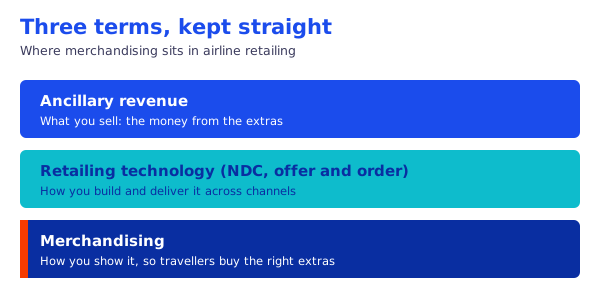
A quick way to keep the neighbouring terms straight. Ancillary revenue is the money earned from the extras. NDC and offer and order management are the standards and systems that let an airline build and deliver those extras across channels. Merchandising is how the products get presented and sold. The extras are what you sell, the retailing technology is how you deliver it, and merchandising is how you show it.
Where merchandising happens across the journey
Merchandising is not one screen at checkout. It runs the length of the trip, and each stage suits different products.
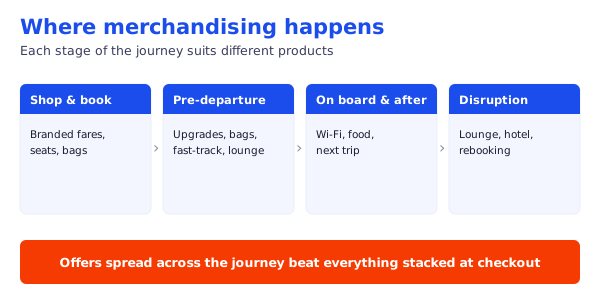
At the shopping and booking stage, the work is the fare choice and the first round of extras: branded fares, seats, bags. This is where branded fares do most of their selling, because a traveller comparing a basic fare against a fuller one is making a merchandising decision whether the airline planned it or not.
Before departure, the airline can come back with what the traveller skipped or might now want: a seat upgrade, extra bags, fast-track, a lounge pass. Offering a seat or fast-track at check-in catches people when they are thinking about the trip again, which is often a better moment than booking.
On board and after the flight, the touchpoints continue, from Wi-Fi and food to the next trip's inspiration. Merchandising the disruption moment matters too. A passenger whose flight is delayed is a passenger who might value a lounge pass or a rebooked hotel, offered without being asked to search for it.
What good merchandising actually does
Four things separate merchandising that sells from a catalogue that sits there.
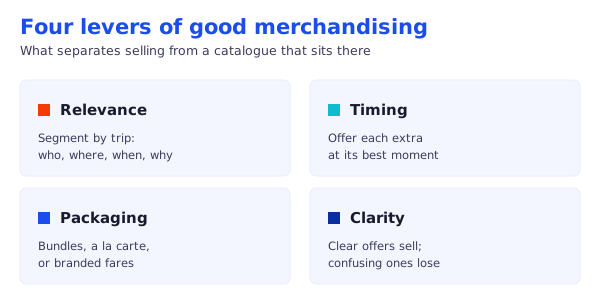
The first is relevance. The old approach segmented travellers by cabin or booking class, which tells you almost nothing about what they want. Better merchandising reads the trip: who is travelling, where, when and why. A family flying in August wants seats together and a checked bag. A Monday-morning business traveller wants a front-row seat and fast-track. When the offer matches the trip, relevant offers convert better than loud ones.
The second is timing. The same extra lands very differently depending on when it appears. A seat upgrade buried at checkout is easy to ignore. The same upgrade offered at check-in, when the trip feels real, often sells. Spreading offers across the journey, rather than stacking them all at booking, gives each one its best moment.
The third is packaging. Airlines have three ways to present the same products: bundled into branded fares, sold à la carte, or grouped into themed packages such as a business bundle or a family bundle. Most travellers respond to different packaging, so the ability to switch between them by segment and channel is what separates a modern retailer from a fixed price list. In one Datalex survey, 87% of airline executives said the flexibility to bundle and unbundle products matters, which is a rare point of near-consensus in this industry.
The fourth is clarity. A confusing offer is a lost sale. When a traveller cannot tell what a fare includes or what an extra does, they default to the cheapest option and buy nothing more. Clear presentation, honest pricing and a simple choice do more for the basket than any amount of persuasion.
Why merchandising has been hard to do well
For years the barrier was the plumbing, not the idea. Older airline systems were built to sell a seat and issue a ticket, not to assemble a bundle on the fly or price a seat by demand. Distribution made it worse. When airlines sell through the older middleman channels, only about 5 to 8% of bookings pick up an extra. Through New Distribution Capability (NDC), which lets an airline send richer offers straight to agents and customers, that figure reaches around 35%.
This is why merchandising and the move to offers and orders go together. The extras have to flow cleanly from the shop window through booking to check-in and the airport, across every channel a traveller might use. Good merchandising on a broken pipe still fails at delivery, which is as much a technology job as a commercial one.
What better merchandising delivers
The results show up quickly when the presentation improves, not just the price. After Oman Air added a dedicated seat page to its booking flow on Branchspace's Triplake platform, paid seat selection rose by more than 83% and seat revenue by nearly 58%. The seats did not change. The way they were shown did.
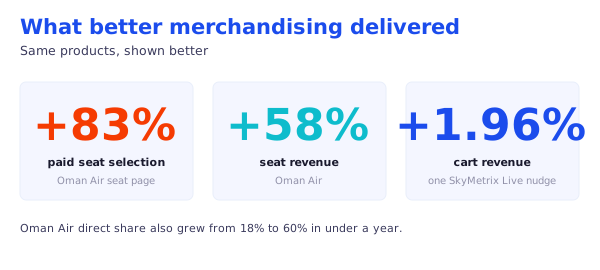
Smaller presentation changes add up too. In one SkyMetrix Live test, a single contextual nudge placed in the booking flow lifted total cart revenue by 1.96%, revenue that came from showing the right thing at the right moment rather than adding a new fee. You can see the wider set in the Branchspace customer stories.
Getting merchandising right
Start with value, not revenue. A seat next to your child, a bag you actually need, a lounge pass when your flight is delayed: these sell themselves when shown at the right moment, and they build the trust that brings the traveller back to the direct channel.
The traps are the mirror image. Sneaking a bag into the basket, hiding what a fare includes, or pricing a flexible ticket above a fresh booking all cost more in lost trust than they earn in one sale. Clear beats clever. An airline that shows the full price honestly and lets people choose ends up with bigger baskets than one that treats merchandising as a way to catch people out.
Doing this at scale takes a retailing platform that can build, package, price and present a wide range of products across the website, the app and check-in, and read enough about each trip to make the offer relevant. That is the job Branchspace's Triplake modules are built for, from Shop and Fly in the booking flow to the Ancillaries Marketplace and SkyMetrix Live behind it.
Frequently asked questions
What is airline merchandising?
Airline merchandising is how an airline presents, packages, prices and times the products it sells around a flight, such as seats, bags, bundles and lounge access, so travellers see relevant offers at the right moment. It is the customer-facing side of airline retailing, distinct from selling branded goods like model planes or crew apparel.
What is the difference between merchandising and ancillary revenue?
Ancillary revenue is the money an airline earns from extras sold on top of the fare. Merchandising is how those extras are shown and sold. Good merchandising is one of the main ways an airline grows its ancillary revenue.
How do airlines merchandise their products?
Airlines merchandise by segmenting travellers around the trip rather than the cabin, showing relevant offers at the right stage of the journey, packaging products as branded fares, à la carte items or themed bundles, and presenting everything clearly across the website, app and check-in.
Why is NDC important for merchandising?
NDC lets an airline send rich, personalised offers directly to agents and customers instead of the limited content older channels allow. Bookings made through NDC pick up an extra around 35% of the time, against 5 to 8% on older channels, so it widens what an airline can merchandise and where.
What is the difference between airline merchandising and airline branded merchandise?
Airline merchandising means selling the airline's own travel products well, such as seats and bags. Airline branded merchandise means physical goods carrying the airline's logo, such as apparel, model aircraft or gifts from a company store. This guide covers the first.
Conclusion: merchandising is retailing you can see
Every airline already has products to sell beyond the seat. Merchandising decides whether a traveller ever sees the right one. The airlines pulling ahead have stopped treating the booking flow as a checkout and started treating it as a shop, where the offer matches the trip, appears at the right moment, and is priced and presented so the choice is easy.
That takes more than good intentions. It takes a platform that can assemble, price and present the airline's full range across every channel, and the data to make each offer relevant. That is what Triplake is built to do, and airlines like Oman Air, KM Malta and Air Mauritius use it to turn their direct channel into a store that sells.
Talk to us about merchandising your products so travellers buy more of what fits their trip.


