
An ancillary is anything an airline sells on top of the seat itself. A checked bag, a seat with extra legroom, a meal, fast-track security, lounge access, priority boarding, in-flight Wi-Fi, travel insurance. The ticket gets you on the plane. Ancillaries are the extras you pick around it. The money airlines earn from those extras is called ancillary revenue.
This guide is for anyone who wants a clear picture of ancillaries and how airlines sell them. You might work on an airline's commercial or digital team, or you might just be curious about where airline selling is heading. It explains what ancillaries are, the main types, how much money they make, why they were once so hard to sell, and how airlines sell them better today.
In plain terms: ancillaries are everything an airline sells beyond the flight, and they now bring in about one in every seven dollars the industry earns.
What are ancillaries?
Ancillaries are optional products and services an airline sells alongside the flight. Some sit close to the trip, like a bag or a seat. Others go well beyond it, like a hotel night, airport parking or a spa pass. Branchspace's own ancillaries glossary entry describes them as the services that improve the journey and give the passenger more choice.
There are two simple ways airlines sell them. An upsell moves you up to a better version of something you are already buying, like a roomier seat or a flexible fare. A cross-sell adds a different product to your basket, like insurance or a lounge pass. Both turn a single ticket sale into a small shopping trip.
What is ancillary revenue?
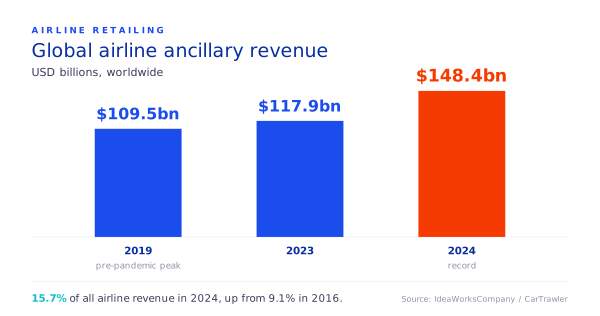
Ancillary revenue is the money an airline makes from those extras, separate from the base fare. It has grown from a rounding error into one of the biggest stories in aviation. Airlines earned a record USD 148.4 billion from ancillaries worldwide in 2024, up from about USD 118 billion the year before.
To put that in context, ancillaries made up 15.7% of total airline revenue in 2024, up from 9.1% in 2016. In under a decade the extras went from a side dish to a main course. For many airlines, ancillary revenue is now the difference between a profitable year and a loss.
What are the main types of airline ancillaries?
The research firm IdeaWorksCompany sorts ancillary revenue into five groups. Most examples you can think of fit into one of them.
That range is why airlines increasingly talk about merchandising, which simply means how products get presented and sold. A modern airline sells far more than seats and bags. Branchspace's own Triplake Ancillaries module is built to handle 30 or more different types, from lounges and transport to refund protection and destination experiences.
Which ancillaries make the most money?
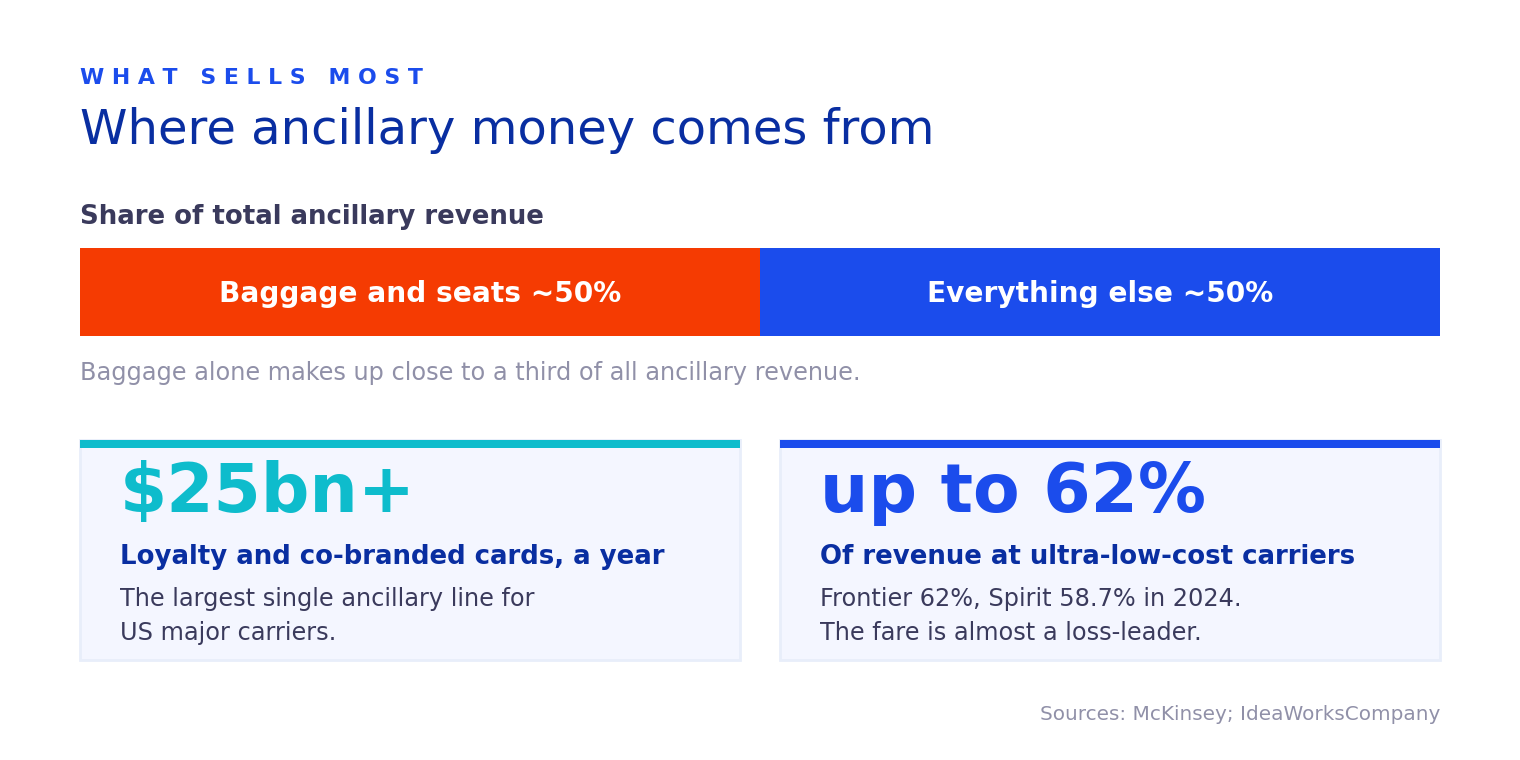
Two everyday items do most of the heavy lifting. Baggage and seat fees together make up roughly half of all ancillary revenue, with bags alone close to a third. They sell in huge numbers and cost the airline very little to offer, so the margins are strong.
For big full-service airlines, though, the largest single line is often loyalty. US major carriers pull in more than USD 25 billion a year just from co-branded credit cards, where a bank pays the airline for the miles it hands to cardholders. This income holds up well even when fewer people are flying, which makes it one of the steadiest ancillary revenue streams an airline has.
Some airlines lean on extras far more than others. Ultra-low-cost carriers sit at the extreme: Frontier earned 62% of its revenue from ancillaries in 2024, and Spirit 58.7%. For those airlines the fare is almost a loss-leader, and the extras are the actual business. Most full-service airlines sit lower, but every one of them is trying to move the number up.
Airline ancillaries by the numbers
A quick reference for the figures that matter, all from public industry sources.
Why did airlines start selling extras?
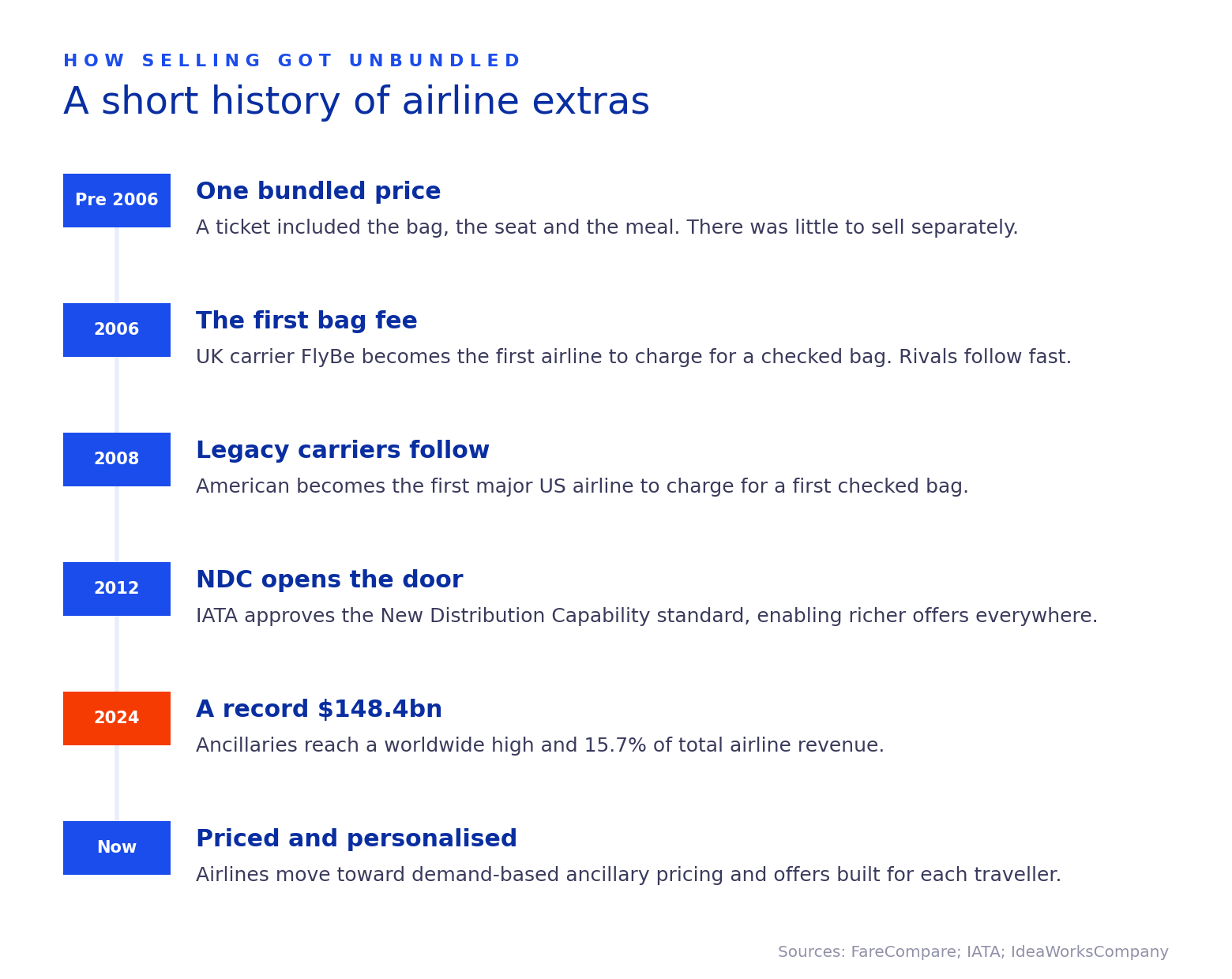
For decades a ticket was one price with everything bundled in. Low-cost carriers changed that in the 2000s. They stripped the fare down to the bare seat and charged separately for bags, food and choosing where to sit. These are called unbundled fares, and they let an airline advertise a very low headline price while earning back the difference through extras.
The trade worked in the passenger's favour too. As airlines leaned on ancillaries, real base fares fell over the long term, so a traveller who only wants the seat can fly for less and skip the extras they do not need. Someone who wants more can buy it. Full-service airlines watched the low-cost carriers grow and copied the parts that made sense, which is why buying a bag or a seat is now normal almost everywhere.
Why were ancillaries so hard to sell well?
Here is the part most guides skip. For years the problem was not the idea, it was the plumbing. Older airline systems, built around the passenger service system and the booking record, were designed to sell a seat and print a ticket. They were never built to sell a spa pass or a bundle put together on the spot.
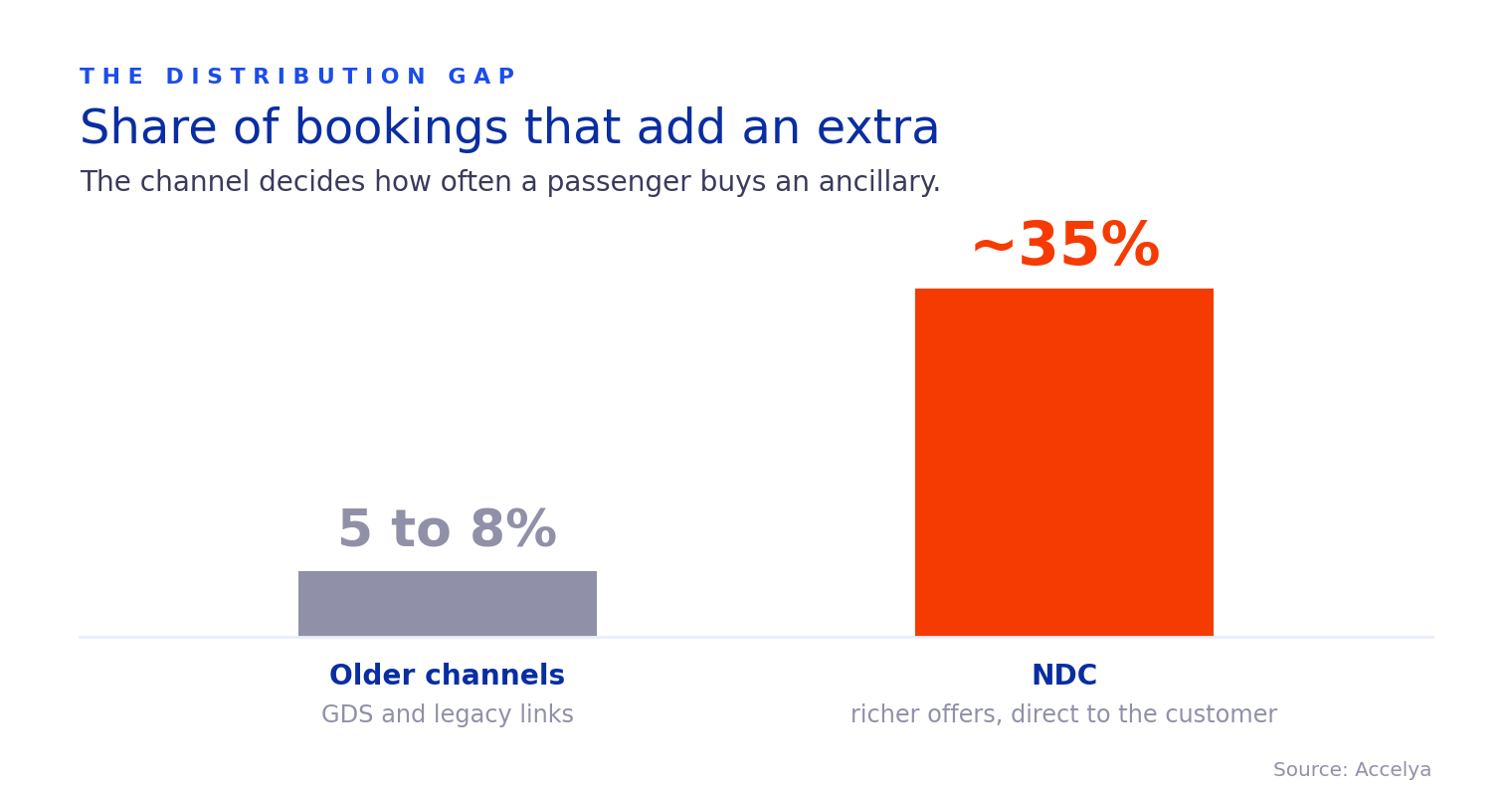
Distribution made it worse. When airlines sell through the older middleman channels, only about 5 to 8% of bookings pick up an extra. Through the newer standard called New Distribution Capability (NDC), which lets airlines send richer offers straight to agents and customers, that figure reaches around 35%.
This is why airlines are rebuilding how they sell, moving to what the industry calls offer and order management and a single order record known as ONE Order. That shift is the foundation ancillaries sit on, and we cover it in depth in our guide to airline offer management. The extras need to flow cleanly across every channel, from booking to check-in. That is as much a technology job as a commercial one, which puts ancillary services integration at the centre of it.
How do airlines sell more ancillaries?
Selling more is mostly about showing the right thing at the right moment. A few simple ideas do most of the work.
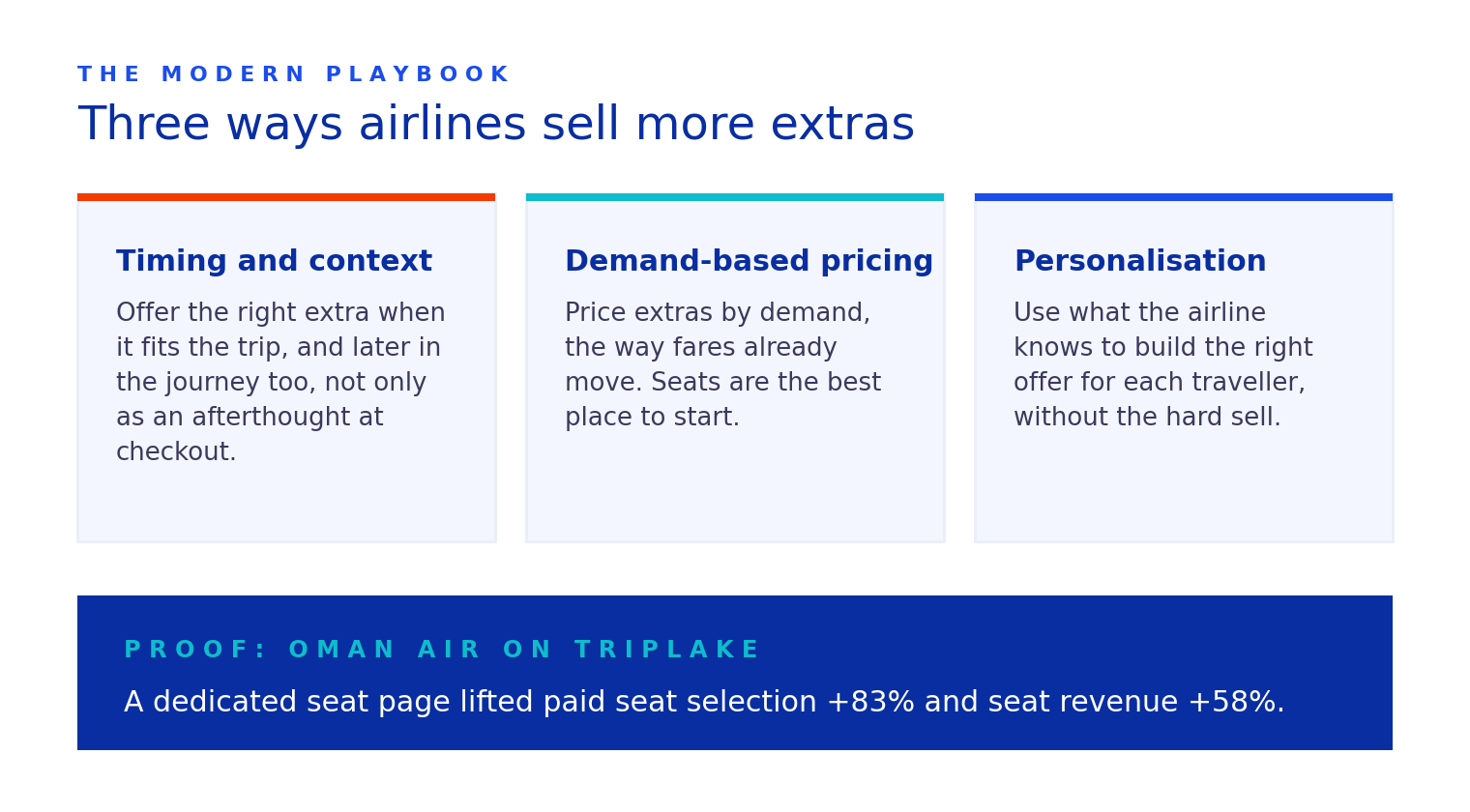
The first is timing and context. An extra offered as an afterthought at checkout rarely lands. The same extra, offered when it fits the trip, often does. A business traveller wants a front-row seat and fast-track; a family wants seats together and a checked bag. We call this contextualised selling, and the point is simple: relevant offers convert better than loud ones. Ancillaries also belong later in the journey, not only at booking. Offering a seat upgrade or fast-track at check-in catches people when they are thinking about the trip again.
The second is pricing. Most airlines still price extras in fixed tiers, the same figure for everyone. There is real room to price them by demand instead, the way fares already move. Seats are the best place to start, because they are scarce, high-value and carry fewer rules than bags. We make that case in What Airlines Get Wrong (and Right) About Dynamic Pricing. Smarter ancillary pricing is one of the clearest paths to ancillary revenue optimisation that most airlines have barely touched.
The third is personalisation, which means using what the airline knows about a traveller to build the right offer. Done well, this lifts revenue without annoying anyone. The results can be direct: after Oman Air added a dedicated seat page to its booking flow on Branchspace's Triplake platform, paid seat selections rose by more than 83% and seat revenue by nearly 58%. The same airline grew its direct online share from 18% to 60% in under a year. Better retailing drove those gains, not higher fees.
Getting it right without losing trust
More ancillary revenue should not mean tricking people. Sneaking a bag into the basket, hiding the real price or making a flexible ticket cost more than a new one all cost an airline something harder to win back: trust. We argue that aggressive selling is a false economy, since clear, relevant offers actually convert better and build bigger baskets.
Regulators watch this space too. Rules on how airlines must display extra fees have come and gone in recent years, and they differ by region, so any airline selling across borders needs to keep an eye on the local picture. The safe path is also the profitable one: show the full price honestly, explain what each extra does, and let people choose.
Frequently asked questions
How much money do airlines make from ancillaries?
Airlines earned a record USD 148.4 billion from ancillaries worldwide in 2024, about 15.7% of the industry's total revenue. The share has climbed steadily for over a decade.
What is the difference between ancillary revenue and ticket revenue?
Ticket revenue is the money for the flight itself, the fare that gets you a seat. Ancillary revenue is everything sold around it, like bags, seat choice, meals and insurance. Both land in the same order, but airlines track them separately because the extras usually carry higher margins.
What are examples of airline ancillaries?
Common examples include checked and carry-on bags, seat selection, extra legroom, priority boarding, in-flight meals and Wi-Fi, lounge access, travel insurance, and hotel or car hire booked through the airline. Loyalty programmes and co-branded credit cards count too, and they are among the biggest earners.
Do low-cost carriers rely on ancillaries more than full-service airlines?
Yes, by a wide margin. Some ultra-low-cost carriers now earn more than 60% of their revenue from extras, because their fares are stripped down to the bare seat. Full-service airlines earn a smaller share, but almost all of them are working to grow it.
Are ancillaries the same as NDC or offer and order management?
No. Ancillaries are the products. NDC and offer and order management are the systems and standards that let an airline build, sell and deliver those products well across every channel. The extras are what you sell; the retailing technology is how you sell them.
Conclusion: from bolt-on fees to a real retail business
The airlines winning in the ancillaries space have stopped treating extras as fees to bolt on and started treating them as products to merchandise. That means offering the right thing at the right moment, pricing by demand, personalising the offer, and selling well beyond seats and bags, all without losing the customer's trust.
Doing that at scale takes more than good intentions. It takes a retailing platform that can build, price and deliver a wide range of extras across the website, the app and check-in, and it takes the plumbing to make those offers flow through every channel. That is what Branchspace builds. Triplake turns any digital touchpoint into a marketplace for the airline's own products and third-party partners, from lounges and transport to refund protection and destination experiences. Airlines like Oman Air, KM Malta and Air Mauritius use it to grow direct revenue, as their customer stories show.
If you are working out how to earn more from ancillaries, the value on the table is real. The prize from better airline retailing could be about USD 45 billion a year by 2030.
Talk to us about turning your ancillary programme into a retail business that delivers.


