
Sell a trip through the older distribution channels and only about 5 to 8 percent of bookings pick up an extra. Sell the same trip through modern retailing and that figure reaches around 35 percent. Same passenger, same route, same products. What changes is how the airline sells.
That contrast is the whole argument for airline retailing. It is the shift from taking a booking to selling a trip: how an airline builds an offer, prices it, presents the extras, records the sale and delivers everything after it, across the website, the app, the call centre and the travel agent.
In plain terms, an airline retailing strategy means selling the way a good online shop sells. The right product, priced to the moment, shown at the right time, on whatever channel the customer chooses. This article walks through the strategies that move the numbers, the proof they work, and how an airline gets from a booking engine to a store.
The foundation every strategy sits on: offers and orders
The move to offer and order management swaps the stack of booking references, the PNR, the e-ticket and the separate extras record, for a single order, and hands the airline back control of its prices and products. An offer engine builds and prices the product the customer sees; an order management system records the sale and coordinates payment, delivery and the accounts.
Radu Iliescu describes it as two jobs at once:
- turning booking-first systems into retailing systems
- clearing out decades of built-up complexity, since many full-service airlines still run on processes decades old
British Airways calls its own programme a second chance to fix a decision the industry got wrong in the 1950s, when it first adopted passenger service systems but missed the chance to separate pricing from booking classes.
Read more in How British Airways is Leading in Offer & Order Management.
The direction is settled. Around 80 percent of IATA member airlines now use some form of dynamic pricing, and most large carriers are working towards offers and orders by about 2030. What follows are the strategies that foundation makes possible.
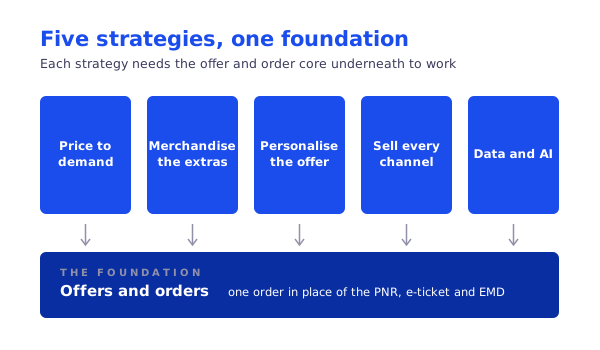
Strategy one: price to demand, not to a fixed table
A lot of carriers price a seat or a bag the same way for everyone, reading a figure from a pre-loaded table. Fares already move with demand, so there is no good reason the extras should not. Dynamic pricing lets an airline price each part of a trip to the moment, based on what a customer is likely to pay and what is left to sell.
The sensible place to start is seats, because they are scarce, high value and carry fewer rules than bags. From there an airline can climb a ladder, from small, smooth price steps through to pricing each component on its own and building the bundle up from the parts.
We set out that progression, and the older technology that holds it back, in What Airlines Get Wrong (and Right) About Dynamic Pricing and go deeper in The Four Dimensions of Airline Dynamic Pricing.
Strategy two: merchandise the extras instead of listing fees
A price list sits there. A shop sells. The difference is merchandising: showing a traveller the right extra, at the right point in the trip, presented so the choice is easy.
Four things separate the two. Relevance comes from reading the trip rather than the cabin, so a family flying in August is offered seats together and a checked bag while a Monday-morning business traveller sees a front-row seat and fast-track.
Timing spreads offers across the journey instead of stacking them at checkout, because a seat upgrade offered at check-in, when the trip feels real, lands far better than the same upgrade buried in the booking flow.
Packaging gives the airline the flexibility to sell the same products as branded fares, à la carte or themed bundles, and switch between them by segment. Clarity keeps the offer honest, because a confusing offer is a lost sale. We make the fuller case in contextualised selling.
Strategy three: personalise the offer to the trip
Merchandising decides how an offer is shown; personalisation decides which offer each traveller sees. The signals are already in the booking: route, cabin, party size, time to departure, past trips. Read together, they let an airline move past the old split by cabin class towards something closer to a segment of one, so the shelf reshapes around the trip in front of it. How that data becomes a live offer is the subject of The Airline Personalisation Stack.
The line to hold is relevance over pressure. An offer that fits the trip reads as help; one that pushes costs the airline trust it cannot easily rebuild, and clear offers build bigger baskets anyway.
Strategy four: sell the same offer across every channel
A traveller who sees one price on the app, another on the website and a third from a travel agent has been given a reason to shop around, usually away from the airline. Omnichannel retailing means the same offer, the same price and the same order follow the customer wherever they buy, from the direct site and the mobile app to the call centre and the agency channel.
NDC carries that rich offer out to third-party channels, so what an airline sells on its own site also reaches the agent booking for a traveller. That lets a carrier modernise the direct channel without abandoning the intermediated business it still relies on. A Digital Identity that recognises the same customer across touchpoints keeps the experience consistent instead of restarting at each step.
Strategy five: let data and AI decide what to show
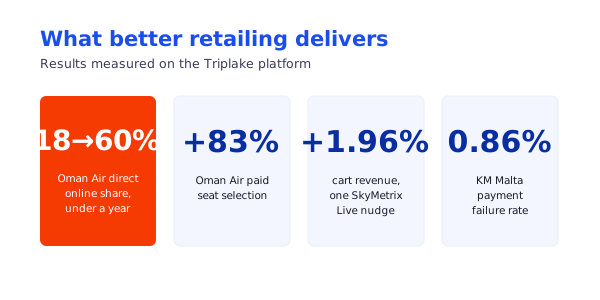
Every strategy above improves when the airline learns from its own traffic. Each search, offer and purchase is a signal about what sells, and a retailing platform that captures it can sharpen forecasts and feed better decisions back into pricing and merchandising. Small experiments on the booking flow often pay for the whole effort: in one test on Branchspace's SkyMetrix Live, a single contextual nudge lifted cart revenue by 1.96 percent, with no new fee attached.
This is where AI belongs, sharpening relevance and price against the airline's own data rather than sitting on the homepage as a slogan. We separate the substance from the noise in Beyond Buzzwords: NDC, OOM and AI.
What better retailing delivers
The strategies are only worth the effort if they show up in the numbers, and they do. After Oman Air rebuilt its retailing on the Triplake platform, its direct online share grew from 18 percent to 60 percent in under a year. A dedicated seat page lifted paid seat selection by more than 83 percent and seat revenue by nearly 58 percent. The seats did not change; the way they were shown did. KM Malta launched a full eCommerce presence and loyalty scheme on the same platform, with payment failures held to 0.86 percent.
Read more in Branchspace customer stories.
None of this needs an industry forecast to justify. Every point of direct share an airline wins back skips the fees the older distribution channels charge, and most extras carry high margins because they cost little to fulfil. On revenue this size, a few points either way decide whether the year is thin or healthy. The business case rests on growing revenue, not cutting cost.
How to start
Getting onto the platform does not mean replacing the core in one go. Triplake is modular, so an airline can put the customer-facing layer to work first, the Shop and Fly booking flow and the Ancillaries Marketplace, running on top of the passenger service system it already has. A better shop can go live while the old core keeps ticketing underneath, so the revenue starts arriving before the deep transformation does.
Sequencing is the real decision. The platform and the old system run side by side for years, so the question is which part of the journey to modernise first, usually where a sharper offer earns the fastest return. Working that out, and timing a supplier search around existing contract renewals, is where Branchspace Transform comes in, checking readiness and designing the path before the build.
Frequently asked questions
What is airline retailing?
Airline retailing is how an airline builds, prices, presents and sells its products around a flight, then records and delivers the sale, across every channel a customer might use. It is the shift from taking bookings to selling trips, so an airline offers the right product at the right price and moment rather than serving a fixed fare from a table.
What is a modern airline retailing strategy?
A modern airline retailing strategy combines a few moves that only work together: pricing extras to demand rather than a fixed table, merchandising products so travellers see relevant offers at the right time, personalising the offer to the trip, and selling the same offer consistently across the website, app, call centre and travel agents. It sits on an offer and order platform that replaces the old booking record with a single order.
What is the difference between airline retailing and NDC?
NDC (New Distribution Capability) is the industry standard for how offers and orders move between an airline and its sales channels. Airline retailing is the wider practice of building, pricing and selling the products well. NDC is one of the pipes retailing runs through, and bookings made over it pick up an extra around 35 percent of the time, against 5 to 8 percent on the older channels.
How do airlines increase ancillary revenue?
Airlines increase ancillary revenue mostly by merchandising better, not by adding fees. That means matching each offer to the trip, pricing extras like seats by demand rather than a fixed tier, and presenting them clearly across booking, check-in and the app. The same products, shown and priced well, routinely outsell a static fee list.
What technology does an airline need for modern retailing?
An airline needs an offer engine to build and price offers in real time, and an order management system to hold the sale as a single order and coordinate payment, delivery and accounting. These connect through shared industry standards such as NDC and ONE Order, and are built in modular pieces so an airline can replace old systems gradually rather than in one risky switch-over.
How long does the move to modern airline retailing take?
Most airlines are aiming for around 2030, with the old passenger service system running alongside the new offer and order platform for at least five years after go-live. The sensible approach is phased: prepare the business case now, decide what to move first, and let the systems and standards mature before committing to a large build.


