
An airline does not have to rip out its passenger service system to start selling like a modern retailer. The new offer and order platform runs alongside the existing PSS, often for five years or more, and the two are kept in step so ticketing, airports, interline partners and the back office keep working while the airline builds new retailing on top.
This guide is for the airlines who have decided where they are heading, to offers and orders, and now have to work out how to get there without breaking the airline mid-flight. It covers what a PSS actually is, how an order system differs, the two routes airlines take, what has to synchronise between old and new, and the layer that holds the two worlds together.
Coexistence is the design that makes a migration this large survivable. Plan the seams between old and new deliberately and the programme moves faster and breaks less; treat the whole thing as a single switch to flip and it stalls.
Can an airline move to modern retailing without replacing its PSS?
Yes, and most large airlines do exactly that. The new offer and order platform goes live for new retailing while the passenger service system keeps running reservations, ticketing and the operational feeds that airports and partners depend on. The two run in parallel, kept in step almost in real time, for at least five years on Branchspace's Radu Iliescu's estimate, and sometimes longer for the oldest ticketing and distribution links.
This is why the biggest programmes in the industry are phased rather than switched. British Airways is running the largest technology change in its history, a £750 million programme that Branchspace is part of, with the old and new systems held in step rather than cut over in one weekend. A change this size is a series of deliberate moves, not a leap.
What is a passenger service system (PSS)?
A passenger service system is the traditional core of an airline. It handles three jobs: reservations, seat inventory, and ticketing with the departure control feeds that follow. Everything is built around the Passenger Name Record, the PNR, which is the booking file the whole industry has used for decades.
A PSS is dependable and heavily proven, but it ties product design to the record it was built around. Inventory is split into reservation booking designators, the single-letter fare classes limited to the 26 letters of the alphabet, so an airline cannot easily sell each seat as its own priced product, the product granularity modern pricing depends on. Ticketing runs on formats that predate the internet. The system does its job well; it just was not built to retail. The fuller story of what the PNR can and cannot do sits in our plain-English guide to offer and order management.
What is an order system, and how is it different from a PSS?
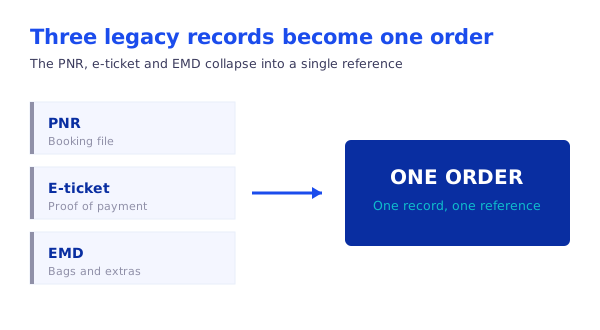
An order management system is the new core for the sale itself. The clean way to hold the difference: the PSS answers "what is booked and ticketed," while the order management system answers "what did the customer buy, and how do we deliver it and account for it." One order record replaces the stack of a PNR, an e-ticket and the electronic miscellaneous documents used for extras, folding all of it into a single reference.
That single record is the point. It separates pricing from the old booking classes, holds any product including non-air extras, and is built in modular pieces so pricing, presentation, delivery and accounting can each improve without replacing the whole. The PSS is the record of the reservation. The order system is the record of the customer.
The two ways to migrate: an order-native PSS, or an order layer on top
There are two real routes, and the choice is mostly about timing and appetite for risk.
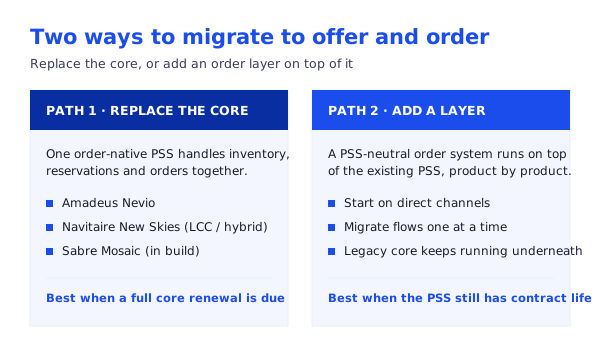
The first is to replace the core with an order-native PSS, a new system that combines inventory, reservations and order management in one. A handful of platforms support the order concept today, including Amadeus Nevio and, for hybrid and low-cost carriers, Navitaire New Skies, with Sabre building its Mosaic platform toward the same goal. This route suits an airline timing a full core renewal, usually when existing contracts come up for renewal anyway.
The second is to add an order management layer on top of the existing PSS. A PSS-neutral order system runs order-based processes for chosen products or channels while the PNR-based core keeps running underneath. The airline can start on its direct channels, prove the model, then widen. It is a step-by-step transition rather than one overhaul, which is why many airlines with life left in their PSS contracts prefer it.
Why a shopping session stays in one lane once it starts
A single shopping session runs start to finish in one system. It does not hop between the old PSS and the new order platform partway through. Once a customer begins shopping in one lane, that lane serves the whole session.
This has a direct commercial consequence for extras. An ancillary offered mid-journey has to come from whichever system owns that session, so a seat, a bag or a lounge pass surfaced during the flow depends on where the flow started. Deciding which routes, flows and channels move to the new platform first is therefore a commercial decision as much as a technical one. Move the wrong flows first and the airline puts its richest merchandising on the wrong side of the fence for years.
What has to synchronise, and what does not
The rule that keeps coexistence sane is short: synchronise the record of the sale, not the shopping.
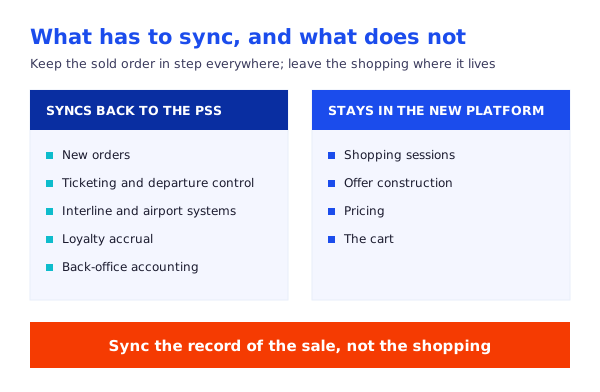
New orders synchronise back to the PSS. Once a customer buys, that order is copied into the legacy world so ticketing, departure control, interline, airport systems, loyalty accrual and back-office accounting all keep working against records they already understand. One common pattern, used by Sabre's PSS Sync, is to create every booking as a native order with a synchronised reference PNR, so the modern record leads and the legacy record follows.
Shopping does not synchronise. Offer construction, pricing and the cart live only in the new offer engine. There is no value in copying every browsed offer or abandoned cart back into a legacy PNR, and plenty of cost in trying. The airline keeps the sold order in step everywhere it is needed, and leaves the shopping where it belongs.
The abstraction layer, and why it is the hardest part
Between the new offer and order platform and the legacy PSS sits an abstraction layer, sometimes called the coexistence layer. Its job is translation: it maps between the order world and the PNR world so neither side needs to know the internals of the other. The order platform speaks orders, the PSS speaks PNRs, and the layer in the middle keeps them agreeing.

This is the hardest engineering in the whole programme. Building a modern order system is well understood; making it talk cleanly to a decades-old reservations core during a weather disruption, without dropping or double-booking anything, is where the real work goes. The layer takes time to design, build and stabilise, and airlines that underestimate it stall. Get it right and the payoff runs for years: because the layer isolates the two sides, an airline can change a supplier on either side later without re-plumbing everything. Branchspace designed exactly this kind of connecting layer for Virgin Australia's retailing stack.
Bridging PNR and Order, in practice
The translation problem is real because the two records were built for different worlds. A single PNR holds only nine passengers before it becomes a group booking, forces every adult on it to share the same fare, caps names at around 64 characters, and treats infants as an add-on to an adult rather than as passengers in their own right. Booking data is scattered across the PNR, the e-ticket and the extras documents. An order is one flexible record with none of those limits.
The bridge has to map between a rigid, split legacy record and a single flexible one without losing fidelity, because any mismatch it introduces is exactly the kind of error coexistence is meant to prevent. This is detailed, unglamorous work, and it is where an experienced partner earns its place. The specific PNR limits are catalogued in Branchspace's Modern Airline Retailing guide and its technical deep dive.
Planning the cutover: what to move first
The order of migration is a commercial call before it is a technical one. Airlines usually start with the channels and flows where they control the whole session, direct web and app first, then widen to more complex, partner-heavy journeys as the bridge proves stable. Sequencing by where the merchandising upside is highest, and the operational risk lowest, beats sequencing by whatever is easiest to lift.
Airlines judge Modern Airline Retailing readiness across five areas: strategy, customer experience and channels, the organisation and its people, day-to-day processes, and technology. The area most often underestimated is the people and process side, and programmes that treat the move as a technology upgrade rather than a business change tend to stall. Smaller and mid-sized airlines are usually better preparing than rushing: build the business case, and time a formal supplier search for when current system contracts come up for renewal, since that search alone takes months to run well. The free Modern Airline Retailing Readiness Playbook is a way to check where an airline stands.
The long-term cost of supporting legacy formats forever
Coexistence is not free. Every year an airline runs both systems, it pays to keep the old formats, the EDIFACT messaging, the legacy PNR handling and the duplicate records, alive and in sync. That cost is the reason coexistence is a bridge to cross, not a house to live in.
The business case rests on new retailing revenue growing faster than the cost of running two worlds at once. The upside is well documented: McKinsey puts the value of better airline retailing at around USD 45 billion a year by 2030, worth 2 to 3 percent of revenue for many airlines, which is why the shift is treated as revenue growth with cost savings as a bonus.
Where Branchspace fits
The hard part of an offer and order programme is rarely the vision. It is running the old and the new together for years without breaking the airline, and knowing what to move first. Branchspace Transform designs the future offer and order plan and the path to it, runs the supplier search, and manages the delivery and the coexistence through to go-live. Because Branchspace also builds the Triplake platform and has designed the connecting layers on real programmes, the advice is grounded in what works rather than what sounds clean on a slide.
If an airline is weighing the move, the free Modern Airline Retailing Readiness Playbook is the place to see where it stands, and the Branchspace Transform team can map a path built for its contracts, channels and appetite for change.
Frequently asked questions
Can an airline adopt offer and order without replacing its PSS?
Yes. It can add an order management layer on top of the existing PSS and run order-based processes for chosen products or channels, or move to an order-native PSS when a full core renewal is due. Most large airlines run the old and new in parallel for years either way.
What is the difference between a PSS and an OMS?
The passenger service system records what is booked and ticketed, built around the PNR. The order management system records what the customer bought and how it is delivered and accounted for, held as one order. The PSS is the record of the reservation; the OMS is the record of the customer.
What is PSS migration?
PSS migration is moving an airline's core selling and servicing from a PNR-based passenger service system to an order-based platform. It is almost always phased, with old and new running side by side, rather than a single cutover.
How long do a PSS and an order system run in parallel?
Usually five years or more after go-live, and the oldest ticketing and distribution feeds can run longer still. The parallel period is planned, not accidental.
What has to synchronise between the old and new systems?
New orders synchronise back to the PSS so ticketing, airport, interline and accounting keep working. Shopping, offers and carts stay in the new offer platform and do not need to synchronise back.
Is ONE Order the same as an order management system?
No. ONE Order is IATA's standard for a single order record. An order management system is the software that creates and runs those orders; an airline adopts the standard and puts it into practice through the system.


