
The IATA World Data Symposium 2025 in Dublin took off in style with the energy of Irish drums and dance, setting the stage for two days of high-impact discussions on how data, AI and technology are reshaping aviation.
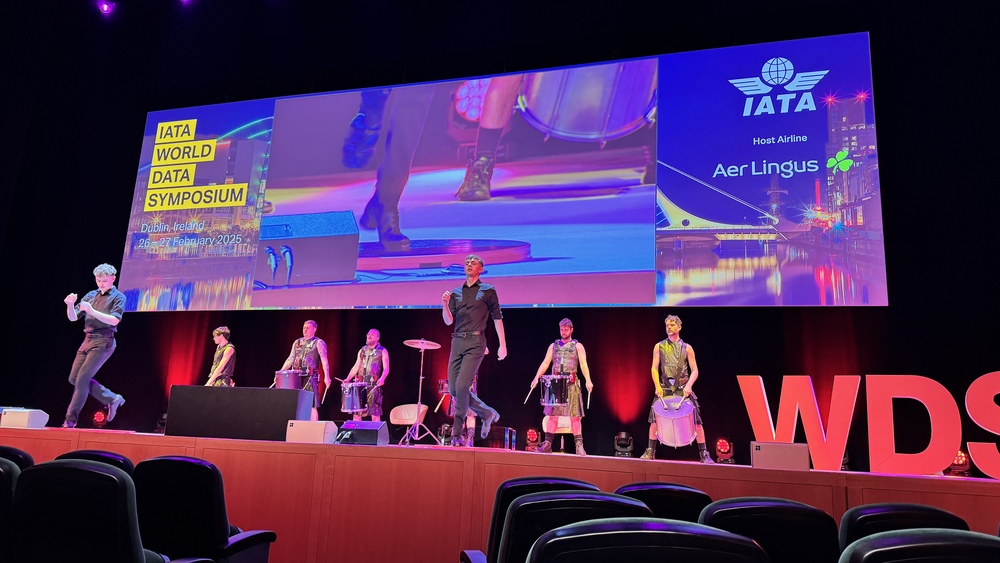
Kim Macaulay, Chief Information and Data Officer at IATA, introduced this year’s event with a clear vision: to unleash the power of data, foster collaboration and drive transformative change. Across multiple sessions, industry leaders showcased real-world applications, proofs of concept (PoCs) and bold strategies for the future of aviation.
67d02c6663b6c62f8fbafffd_Screenshot%202025-03-11%20at%2011.55.19%E2%80%AFAM%202%20(1).jpeg)
Unlocking opportunities: Data & AI in action
Lynne Embleton, CEO of Aer Lingus, highlighted the rapid pace of technological advancement, emphasising how data is revolutionising airline operations. From minimising waste in airline catering to enhancing efficiency, AI-driven solutions are creating opportunities that were unimaginable just three years ago. However, the greatest challenge remains "shifting the mindset towards curiosity, exploitation of data and questioning how can we do things better.”
Digitally delivered services, economic development, AI and sustainability
Marie Owens Thomsen, SVP Sustainability & Chief Economist at International Air Transport Association (IATA), provided thought-provoking insights into the economic impact of digital services, revealing that digitally delivered exports now account for 67% of global trade. She also compared investment trends, noting that:
- The global AI investment stands at $160bn
- If that amount were redirected to sustainable aviation fuel (SAF), it could cover aviation’s SAF needs from 2029 to 2044
Another striking comparison is that aviation and data centers each contribute 2.5% of global CO₂ emissions. This highlights the pressing need for sustainability-driven innovation.
Economic growth, as measured by Revenue Passenger Kilometers (RPK) and GDP growth rates, has shown unusual stability, with lower oil prices further supporting GDP expansion. This stability is reinforced by strong employment levels that help to counterbalance the effects of inflation.
IATA projects record-breaking airline profitability this year, yet margins remain slim and vary significantly across regions and carriers. On average, airlines earn just $7 per passenger—barely the price of a pint of Guinness. Every operational cost improvement makes a difference.

Cybersecurity: Beyond defense, toward resilience
Shawn Henry from CrowdStrike delivered a compelling session on cyber resilience, stressing that connectivity is a double-edged sword that drives efficiency while increasing risks. The key takeaway? A proactive security culture is essential for resilience in an increasingly digital aviation ecosystem.
67c73802711265a21abcb4e3_Screenshot%202025-03-04%20at%205.26.58%E2%80%AFPM%20(1).png)
Architecting with cost in mind: Lessons from Amazon
Dr. Werner Vogels, VP & CTO of Amazon, presented seven principles of cost-conscious architecture, urging the industry to rethink cloud expenses, eliminate digital waste and ensure that each new feature justifies its cost. Cloud outshined all other expenses, but created the highest impact by far in terms of carbon emissions perspective. He also addressed key areas of digital waste, including unnecessary storage retention, over-provisioned compute and inefficient data lifecycles.
Among his key lessons:
- Cost is a non-functional requirement
- Unobserved systems lead to unknown costs
- Cost optimisation is incremental
- Systems that last align cost to business
- Architecting is a series of trade-offs

The intersection of motorsport & aviation
FIA’s Chief Development Officer, Habib Turki, drew fascinating parallels between Formula 1 and aviation, showing how AI and real-time data can optimise both race performance and airline operations.
AI use cases shown at WDS that are driving real change:
- Predictive maintenance & scheduling to reduce turnaround times
- Crew planning optimisation
- Baggage optimisation to solve overhead bin congestion and related delays
- Real-time pilot data for enhancing safety and fuel efficiency
- AI for document compliance to improve regulatory accuracy
- Digital identity solutions that enable seamless travel across complex use cases
Willie Walsh (IATA) emphasised that collaboration and industry-wide data-sharing standards will define the future of aviation: “Collaboration is no longer optional and industry-wide standards for data-sharing will define the future of aviation.”
67c73bf7d1eea0baa401cf1a_7.1-Lufthansa%20(1).jpeg)
What else…
A Tiny island’s big role in AI
One unexpected highlight? The Caribbean island of Anguilla, which owns the .ai domain and is projected to generate over EC$100M in revenue this year from AI-related domain registrations. These funds are now being reinvested into tourism infrastructure, including an airport expansion. Anguilla didn’t get to choose owning the .ai domain as it was assigned by default, but what started as a mere coincidence has turned into a major economic boost for the island.

Hackathons & real-time insights
Innovation wasn’t just discussed—it was put into action! The IATA Hackathon brought together developers tackling cargo optimisation challenges, with students from Trinity College Dublin also taking part. Meanwhile, Rozie AI provided real-time session highlights and key takeaways via the event app.
Looking ahead & exploring more
With incredible moderators, inspiring discussions and game-changing insights, WDS 2025 was a true testament to aviation’s data-driven future. We are looking forward to where this journey will take us next.
See additional photos from the event below!
67c73c056be5f3c2a71cb043_moderators%20(1).jpeg)
67c73bdac8066d775079ee79_3.1-investments%20in%20perspective%20(1).jpeg)

67c7334d38aff2c11ca6a1d3_Shawn%20Henry%202%20cybersecurity%20(1).jpeg)
67c7346d4d7e0880e360af39_5-economies-of-scale-amazon-presentation%20(1).jpeg)


